212-661-2563
Menu

150 E 61st St, Manhattan, NY, 10065

1424 Richmond Ave, Staten Island, NY, 10314

1150 Amboy Ave. Edison, New Jersey, 08837

Free Consultations for Cosmetic Procedures

212-661-2563

Facelifts and More: All Your Lift Procedure Questions Answered

Considering a facelift but need more details? Click here to learn all about the differences between facelifts, mini-facelifts, brow lifts, and neck lifts. In 2015, a whopping 15.9 million patients opted for surgical and minimally-invasive cosmetic procedures in the States!

If the thought of getting a lift procedure has ever crossed your mind, it isn’t surprising considering how common they are. On the face of it (pardon the pun) the operation seems a tad unnatural, so it’s often the subject of a lot of questions. For example:

How do they work?

How long’s the recovery period?

How long will the effects of the surgery last?

Is it painful?

Is there more than one kind of facelift?

These are some of the most common questions associated with facelifts, and we’re going to tackle all of them throughout this blog post. Let’s dive on in.

What’s a Facelift?

For those of you who don’t know, as we get older our skin will begin to lose its elasticity. So, over time, our face is prone to developing deep wrinkles, and saggier looking skin.

Therefore, a facelift aims to tighten or remove any sagging or wrinkled facial and/or neck tissue from across the bottom two-thirds of your face. This lift procedure is ideal for anyone who wants to carry on looking like a younger version of themselves.

Here’s a short video from Dr. Andrew Miller, one of our expert surgeons here at Allure Plastic Surgery:

There’s More Than One Lift Procedure

The most common misconception about facelifts is that there’s only one type of lift procedure. We’re here to set the record straight and tell you there’s at least four you should know about if you’re considering this procedure.

The kind of lift you’ll require will depend on a couple of factors. Namely, how much excess skin you have, and what you want to look like as a result of your surgery.

1.) the Full Facelift

Let’s start with the ‘full facelift.’ This is the most extreme lift procedure out of the four discussed in this article.

Your surgeon will make a few incisions just behind your hairline (close to your temples) and will then gradually work their way round to the front of your ears. This is done to ensure that no incision is noticeable on your cheeks.

As the cut is taken behind the ear, the incision stays completely inside the crease and away into the hairline so it’s completely hidden. Then, your cosmetic surgeon can realign your deeper tissues located under your skin and get rid of any excess skin.

By doing this, they’re able to smooth out any creases on your face and get rid of any jowls under the chin and neck. Naturally, out of all four of these procedures, there’s a slightly longer recovery time. However, after that’s passed, patients will notice a lot of improvement across their face.

2.) the Mid-Facelift

The mid-facelift tends to focus on the center of the face. This is particularly effective if you’re conscious about the sagging in your cheeks or the deeper wrinkles found around your mouth.

3.) the Lower Facelift

If you’re only concerned about saggy skin across the bottom half of your face (and as long as the upper half of your face is in excellent condition), a lower facelift is probably the best option for you.

However, only opt for this if you’re confident you don’t need any work done across the middle of your face- otherwise, you’ll get an unbalanced and unnatural look, and it’ll be obvious you’ve had cosmetic surgery.

4.) the Mini-Facelift

The best way to describe this lift procedure is by likening it to a smaller ‘full facelift’. This is an excellent way of eradicating any unwanted signs of aging before they become too ingrained.

The benefit of nipping these issues in the bud with a ‘mini-facelift’ is that it drastically decreases the likelihood of requiring more extensive surgery later down the line.

As part of the operation, the surgeon will use much smaller incisions. This is what makes this method less invasive. The surgeon typically makes these cuts across the hairlines above both ears and/or the creases surrounding the ears.

A ‘mini-lift’ will focus on tightening the skin around the cheeks and jaw. Once the surgeon has made these incisions, they’re able to lift and tighten the tissue surrounding the cheeks. This is essential if you’re hoping to correct any jowls and refine your jawline.

However, this lift procedure doesn’t offer any muscle correction. Therefore, the results aren’t permanent. The effects tend to last approximately five years. You might be interested to know, that depending on your own personal circumstances, this procedure may be able to be performed using just a local anesthetic.

However, it’s possible to entirely under while the operation commences. During your consultation with your surgeon, they’ll advise you as to which option is the best for you.

Will My Eyelids Be Operated On?

In short, no they won’t. Typically, people assume that having a facelift means operating on the entire face, including the eyes- and they’re not. Facelifts only tackle the lower two-thirds of your face (your cheeks and jawline).

This is because our facial anatomy massively differs depending on which part of the face you’re talking about. Therefore, a completely different set of techniques are necessary if you wish to operate on them.

Hence, if you’re looking to correct the appearance of your eyelids, you’ll need to opt for an eyelid lift. Conversely, if you’re looking to smooth any wrinkles found on your brow, you’ll want a brow lift.

If these other procedures are something you’d like more information on, we recommend speaking to your cosmetic surgeon about this during your consultation. This is the best way to explore all of the options available to you.

Choosing a Cosmetic Surgeon

Like any operation, you want to be sure you can trust the surgeon who’s handling your procedure. This undoubtedly leads to the question: how do I choose a cosmetic surgeon?

After all, any facelift requires the doctor to understand the sophisticated methodology necessary to pull off a lift procedure. Plus, they need to possess extensive knowledge of facial anatomy.

Unfortunately, not all cosmetic surgeons get taught about facelift procedures as part of their residency training. Therefore, if you’re considering going under the knife, it’s crucial you do your homework before settling on a surgeon. We recommend asking these questions to help you with your research:

Ask any potential surgeons about their training and experience in facial cosmetic surgery. Ask questions regarding their depth of experience, years of great results evidenced by many before and after photographs and patient testimonials. Inquire as to how many facelift procedures they’ve performed.

If they have experience conducting this procedure ask if it’s possible to see a few before and after snaps. This is essential if you wish to evaluate the quality of their work.

You should also make sure the surgeon specifies the gender they’re most familiar working on. This is because the facial anatomy varies massively between the two sexes.

We also urge you to undertake the following tasks:

Read reviews from previous patients.

Don’t limit yourself to one consultation, shop around and book to see a few surgeons before making your final decision.

Try to find out which surgeons, doctors select for their facelifts.

Last but not least, we can’t emphasize enough how important it is to opt for a board-certified cosmetic surgeon. This dramatically increases the chances of hiring the services of a thoroughly trained and experienced surgeon.

How Do I Prepare for My Lift Procedure?

You won’t have to worry about this too much because your plastic surgeon will give you a list of pre-op instructions. This will most likely include all the medications you need to stop taking before your lift procedure.

This is necessary because of certain drugs that thin the blood. This consequently causes more bleeding during surgery- naturally, this could forge a more dangerous situation.

Other practicalities you need to prepare for include; arranging for someone to take you home afterward because you’ll be unable to drive. We also recommend getting a friend or family member to stay with your for at least the first 48 hours after your surgery (in the rare event you experience any complications.

TOP TIP: If you’re worried about the swelling you’ll experience during the aftermath of your lift procedure, try eating a low-salt diet. Previous patients have said this helped them minimize the swelling.

What’s the Recovery Process Like?

You’ll be pleased to hear that despite the complexity of a lift procedure, the recovery time is relatively quick. Typically, most patients are up and running within two weeks of their operation.

However, you’ll have to delay any strenuous exercises for about a month. Please note these time frames are usually shorter if you opt for the mini facelift. You should also be aware that every individual will heal slightly differently, so be sure to listen and follow any instructions your surgeon gives you regarding your aftercare.

Usually, most patients are primarily concerned with how long it’ll be before their face looks aesthetically presentable. This is certainly understandable because unlike most other operations, you can’t cover up your face as easily as you go about your day!

Naturally, bruising and swelling is completely normal after a lift procedure. These side effects tend to look their worst two days after surgery. After a couple of days pass, the bruising and swelling will gradually cease and will be barely noticeable in around 10 to 14 days.

However, we often find lots of our patients feel comfortable leaving the house after about a week’s worth of recovery. Rest assured, your cosmetic surgeon will be able to advise you on when it’s safe for you to apply makeup to cover up any bruising.

Finally, we just want to mention how important it is to protect your face from the sun, especially after a facelift. This is because your skin is far more susceptible to burning (even after several weeks pass). Plus, keeping away from the sun will help your scars to heal.

We recommend wearing UV-protection sun-glasses, a high-factor sunscreen on your face, and a wide-brimmed hat if you’re planning to venture into the sunshine.

How Long Will the Effects of a Facelift Last?

Unfortunately, no matter how skilled or experienced your surgeon is you won’t be able to eradicate the signs of aging as time goes on completely. However, a good-quality facelift conducted by an industry professional should aim not only to tackle the ‘problems’ you have now but to also adapt as the years progress.

This means that although nothing can stop the natural aging process, a facelift should always make you look years younger (in comparison to if you hadn’t of had the surgery). However, if you want to prolong the effects of your lift procedure you should consider doing the following:

Maintain a healthy weight. This is essential because significant fluctuations in your size can cause your skin to stretch out again. Therefore, increasing the likelihood of your skin to sag.

We also recommend adopting a thorough skincare routine. This is also imperative for keeping your skin healthy and reducing the appearance of aging. If you’re unsure which products to use, we suggest speaking to your surgeon. They’ll be able to steer you in the right direction.

Would You Like More Information About the Facelift Procedure?

If this article has prompted questions about any lift procedure, please feel free to reach out and contact us. Once you’ve filled out the contact form, one of our team of friendly professionals will get in touch with you soon as soon as they can.

Rest assured, no question is too big or too small- so please send in all of your inquiries. Also, if you enjoyed this blog post, we’re confident you’ll love our other articles. Over on our blog, we cover handy hints and tips on everything from cellulite to breast enhancement surgery. Enjoy!
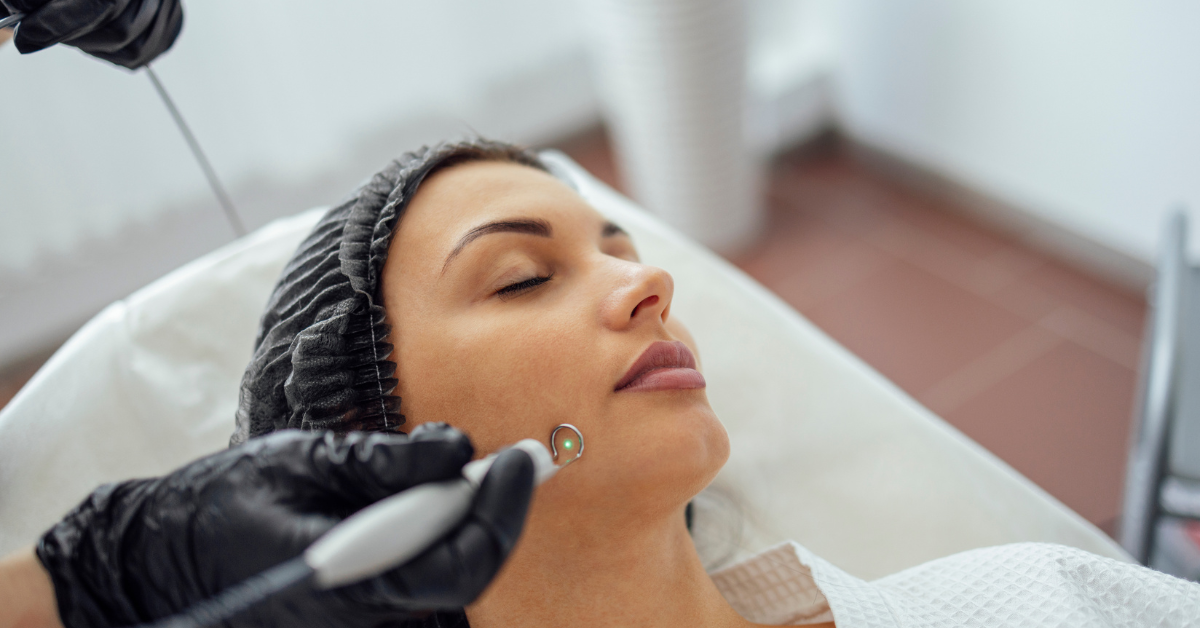
What to Expect from Laser Treatment for Acne Scars?

Nobody likes to have acne scars. Learn how you can reduce or even eliminate these frustrating blemishes by getting laser treatment for acne scars. There are lots of things in our environment that can cause damage to our skin. The delicate skin on our faces is an area of particular concern.

Aging and sun exposure over time cause some of these blemishes. But even young people can have significant blemishes on their face. Severe acne can leave scars and some skin conditions cause an unpleasant appearance. The good news is that you don’t have to live your entire life with those scars on your face. Covering them up with concealer and foundation is a lot of work every day. And you should be able to love the skin you’re in.

Laser treatment for acne scars and other facials blemishes can be quite effective. Keep reading to find out about the procedure and if you’d be a good candidate.

Laser Skin Resurfacing: An Ideal Laser Treatment For Acne Scars

Laser skin resurfacing, laser peel, and laser skin rejuvenation, what’s the difference?

They are all the same basic procedure but use different lasers to focus on specific areas. They use a laser with a strong anti-aging effect for skin rejuvenation. For the laser peel, they use a laser that strips away layers of damaged skin. During the procedure, the laser breaks the molecular bonds of damaged cells. This is how they remove the damaged layers of skin. 

Once those are gone, the laser begins to stimulate the growth of new cells. It also stimulates collagen production. Collagen is extremely important for the elasticity of your skin. All this together brings about a more uniform, youthful appearance to your skin.

Are You a Candidate?

It depends on your skin type and skin tone. Also, certain medical conditions can increase the risk of adverse side effects. Laser treatment for acne scars and other blemishes works like a dream for some people. For others, it is not effective and can even worsen the problem. Your plastic surgeon will help you determine how effective acne scar laser treatment will be for you.

It may not seem like it, but this procedure is quite invasive and you will need to heal. If you have a connective tissue disorder or an immune system disorder it’s not a good idea. These conditions can interfere with a successful healing process. Plus, they can increase the risk of side effects.

Talk to your dermatologist about any conditions you have. Not every problem will increase your risk of side effects but your doctor should know what you have. Don’t forget to mention even minor problems like cold sores or fever blisters. Laser treatment can cause flare-ups in people that are prone to these. Sometimes doctors will prescribe an anti-viral medication to avoid this happening.

It would also be ideal that you’re not taking any prescription medication. The best candidates for the procedure have elastic, non-oily skin. It is also ideal if your skin doesn’t scar easily after minor injuries. The procedure also works best for those with lighter skin tones. Darker skin tones are more prone to side effects like skin discoloration.

How to Prepare for the Procedure

There are many things you can do before the procedure to increase your chance of success. We’ve already mentioned that you shouldn’t be taking any prescription drugs. For at least 10 days before the procedure, you shouldn’t take anything at all.

Don’t even take mild medications like aspirin or ibuprofen. Even supplements like Vitamin E can interfere with your body’s ability to clot blood. This will affect and prolong the healing process. If you are a smoker, you should not have a cigarette for two weeks before or after. Smoking is horrible for your skin anyways. You could use the procedure as motivation to quit!

What Does it Feel Like?

You may be wondering what laser treatment for acne scars feel like. After all, don’t they use lasers to cut through metal and stuff?

Of course, the lasers used in skin resurfacing are much different. But they do use heat to ‘zap’ the cells and break those molecular bonds. Some lasers also send a blast of cold air to ‘trick’ your nerves into not feeling the heat as much. There are a few different types of treatments and each laser will feel a little different. 

Some patients describe the sensation as kind of like a zap of static electricity. A few zaps may not be too bad. But, as you may know, pain can be accumulative. If you start to feel overwhelmed, let your doctor know so you can take a short break. There’s no shame in it.

Recovery, Results, and Risks

On average, it will take about 2 weeks for your skin to heal and new cells to grow. Most people experience redness of the skin and swelling at the treatment sites. Sometimes it can be a bit uncomfortable as well. Basically, it looks and feels like a sunburn.

Most people experience a significant reduction in skin blemishes. The skin gets smoother, tighter, and takes on a more youthful appearance. In rare instances further scarring, burning and even skin discoloration can take place. As we’ve mentioned, certain factors like skin tone heighten the risk of this. 

Be sure to cover everything in detail with your dermatologist before the procedure. A competent doctor will assess your particular risks and give you a recommendation.

Laser Treatment for Acne Scars

Laser treatment for acne scars is very effective for some people. But as we’ve mentioned, there are risks. Only you can decide if the treatment is right for you. How severe are your scars? Do they bother you a lot? Do you refuse to leave the house without good concealer and foundation? If your doctor says you are a good candidate, then go ahead. Get rid of those pesky buggers!

But if your doctor says you are at increased risk of side effects, consider with care. If your scars aren’t that bad, you could make a minor problem worse. Only you can decide if you want to take the risk. For more information, contact us today. There’s nothing to stop you from finding out how to get rid of those pesky scars forever!

What to Expect During your Rhinoplasty Recovery – Hint: It’s not as Bad as you Think!

If you’re reading this, then you’ll know that a rhinoplasty is surgeon-speak for a nose job.

Rhinoplasty is one of the most common plastic surgery procedures in America and rated among the top 6 procedures last year. According to a recent survey by the American Society for Aesthetic Plastic Surgery, 148,143 procedures were performed in 2016.

With nose jobs being so popular, anyone who’s interested will want to do their research. Look through photos to see what surgeons can achieve, and find out what a rhinoplasty is like before, during and after the event, or take a look at this video where Dr. Andrew Miller discusses recovery from a rhinoplasty procedure:

Reality TV would have you believe that rhinoplasties are agony to recover from. We’re here to dispel that myth and give you the lowdown on what to expect during your rhinoplasty recovery. It’s not as bad as you may think!

Why Get One?

While it’s true that many people who opt for a rhinoplasty are unhappy with the appearance of their nose there are some other reasons people might get a nose job.

Rhinoplasties can sometimes correct breathing problems or damage from a trauma to the nose. Others have a birth defect that a rhinoplasty can correct.

Whatever your reasons for having plastic surgery, it’s very important to thoroughly research your chosen procedure. Find out how to prepare, what your surgery involves, what the risks are, and how best to recover afterward.

Remember that there are pros and cons to any surgical procedure. If you have any concerns at all at any stage of the process, always discuss these with your surgeon.

What Happens During a Rhinoplasty?

Every Nose is Different

The rhinoplasty procedure is unique for everyone, as each person’s requirements vary, and every nose is different.

Depending on the individual, you can have either open or closed surgery.

Closed surgery is where the surgeon operates internally, through your nostrils. Or you may have open surgery, through an incision at the base of your nose, with your surgeon readjusting the bone and cartilage that way.

Anesthetic Stops the Pain

You’ll be under general anesthesia where you’re asleep and out for the count.

This means that, during your rhinoplasty, you won’t feel pain while your surgeon works on you.

The type of anesthetic you’ll receive depends on your particular needs and procedure, and also on your surgeon’s preferences. If you have any specific requests, discuss them with your surgeon beforehand.

How Long Does it Take?

A rhinoplasty can take between 1-2 hours if it’s a simple op, though complex surgeries could take up to 4.

The type of anesthetic you have will also impact the procedure length. Local anesthetic means less time as you’re already awake throughout, whereas general anesthetic means they’ll have to monitor you as you come round.

Your surgeon will discuss your options and duration with you during your consultation.

Your Rhinoplasty Recovery

Now, you’ve had your rhinoplasty, and it really didn’t hurt much, which was awesome. So what comes next?

Unfortunately, you’re not going to walk out the door after your op and be able to show off your dream nose straight away.

It’s going to be a bit of a caterpillar-to-butterfly transformation, but those are some of the best kinds, right? Exactly.

Swelling

The first thing you’re going to notice as you start your recovery is that your nose is pretty blocked and swollen. You’ll probably still have in the splints that your surgeon used during the procedure, plus loads of internal packing and dressings.

You know that bunged-up feeling you get when you’re sick and your sinuses are all blocked? That’s sort of what it feels like. It’s not painful, but it is uncomfortable.

You’ll also probably feel like your nose is huge. It’s not, by the way, but the swelling in your nose and face will make you think it is.

At Allure Plastic Surgery, your packing is removed the day after your procedure. Once they’re taken out, the pressure is released and you’ll feel like you’re floating on air, plus you’ll be able to smell stuff again! Splints may stay on until around days 5-7 post-op.

The best way to counter this at first is to lay or sit in your bed, with your nose higher than your chest, for optimal blood flow and minimized swelling and bruising.

During your rhinoplasty recovery, don’t do intensive exercise for 2 weeks after surgery. Things like lifting weights, swimming and running are a no-no. But you can do light walking, though probably just around your house and yard is best in the beginning. Why?

Well, on the street or at the park, think animals, kids, and balls. You don’t want anything to jump at, strike, or fly at your nose before it’s healed. It’ll really hurt, and it can easily shift your stents and delicate nose out of place.

Now you can start to see glimpses of that beautiful nose you’ve been coveting! But once the dressings are off, you’ll notice something else.

Bruising

Just to be clear, the bruising doesn’t hurt. But it might look kind of bad for the first week or so, as it goes from dark purple and begins fading to green, and then yellow.

For some people, the bruising that comes during the recovery phase is barely an issue, though for others it’s downright obvious. Again, it all depends on the person, so it’s a wait-and-see thing.

You might see bruising on your nose and around your eyes, too, from the surgery.

For the first 48 hours, use ice to minimise the bruising and swelling. The discoloration will probably last between 10 days and 2 weeks, but soon it’ll be gone and like it never happened.

You’ll forget all about it as you see the fruits of your labor coming into focus!

Wound Care

This one’s pretty basic: you need to keep your wound clean.

A great way to do this is to soak a Q-tip in hydrogen peroxide, and gently apply it to any scabbed blood until the scabs dissolve.

Sounds kind of gross, we know. But it’s really important to make sure you don’t get infections during your rhinoplasty recovery stage, and also so your face and nose feel as comfortable as possible.

This sort of cleaning will only be necessary for up to the first 5 days. After that, the bleeding should stop so you won’t need to worry about it anymore.

Of course, wound care is something you’ll discuss with your surgeon. You won’t be able to shower and wet your face because of the dressings and packing, so make sure you’re armed with all the information you need to keep wounds clean and dry.

Dry Mouth

This is something that isn’t really stressed much, but dry mouth is a thing during recovery. When your nose is totally out of action while the packing’s in and the swelling’s going down, the only thing you can breathe through is your mouth.

Since you’ll be doing a lot with your mouth – eating, breathing, talking – it will get pretty dry. Soft and moist food will definitely help in the beginning, and during the day you can drink lots to counter it.

The time dry mouth is worst is at night.

Again, this is not something that’s painful, it’s just uncomfortable. But if you take the proper steps to reduce it early on, you’ll thank yourself later.

You’ll want to increase the moisture in the air, and a great way to do this is to have a humidifier running through the night while you’re asleep.

During your rhinoplasty recovery, having a jug of water beside you in the night is a necessity. You might find yourself waking up at first, as your body adjusts to this new nightly state, so take sips of water to relieve your dry, scratchy mouth and throat.

Though this isn’t painful, it may be irritating. But you’ll be getting ever-closer to nose perfection, and a dry mouth is going to be so worth it.

Sensitivity

This may sound obvious, but your nose is going to be pretty sensitive for a little while.

During the recovery stage, things will feel uncomfortable and you might be tempted to touch, gently massage, or apply pressure to your nose.

Don’t.

While you may suffer discomfort, contact with your nose is only going to delay the healing process and prolong your recovery time.

It’s easier said than done, but when you feel the urge to prod or poke your nose, go do something to distract yourself. The quicker your recovery period is over, the quicker you’ll see the transformation you’ve been waiting for.

Ongoing Recovery

For those first 5-7 days, your rhinoplasty recovery phase will be limited by the nasal stents and packing. Once those are out, you’ll need to take further steps to aid the healing process.

Be aware that it takes 4-6 weeks for your nasal bones to heal solidly, so you’ll still need to treat your nose with caution.

Moisturize With Saline

The lining of your nose, or the nasa mucosa, will need to heal after your surgery and to do that it needs moisture.

Carry a saline nasal spray with you everywhere, and use it at least 3 times a day, but more if you need to. A saline spray helps to replenish the moisture content of the nasal lining.

Saline also helps to helps to curb swelling, and keep the lingering wounds inside your nose clean, which will speed up the healing process.

The internal scabbing during the recovery stage can take up to a month to heal, so be aware of that and treat your nose accordingly.

Don’t Blow Your Nose

This is going to take a lot of self-control, but don’t blow your nose during your recovery phase.

Many surgeons advise that a gentle nose-blow after 3 weeks is okay, but the emphasis is on the word ‘gentle’.

You’ll often be advised not to put any pressure on the sides of your nose, which can be frustrating, as that means that there won’t be a buildup of pressure inside. And use your saline spray first, to soften up the scabs inside.

Still, it is only for just over a month. Chances are you’ve been waiting for your rhinoplasty result for quite a while, maybe even years, so a month is nothing in the grand scheme of things. Remember that; it’ll help.

Flying

If you’ve had your surgery far away from home, your surgeon will likely advise you that you can fly home after 7-10 days.

By this time, internal and external nasal splints will have been removed, as will the packing. The swelling will mostly have gone down, and any oozing or dripping will have usually stopped within the first couple of days.

Take your saline nasal spray with you on the flight and be sure to use it more than you would on the ground. Most of us get dry noses on a flight, even without a major trauma to them, which is essentially what a rhinoplasty is.

The nasal cavities can dry out on a flight, so keep them moist with lots of saline to combat it and ease discomfort.

It’s good to be aware that flying can induce general swelling in many people, and this can include your nose.

If you find swelling is something you’re prone to, after your initial flight home it may be a good idea to hold off flying for a few months until things have calmed down internally.

The Transformation

Finally.

Your time has finally come.

You’ve been through the surgery, the discomfort, the period of looking like you’ve had a few rounds in the ring with someone a lot bigger and heavier than you. But the day has finally come.

You look in the mirror and see, for the first time, a perfect new nose without any traces of telltale yellow bruising, or the swelling that you thought would never go away.

Like the caterpillar who hid away in his chrysalis for a month and emerged as a beautiful butterfly, your nose has finally undergone its transformation to a thing of beauty on your beaming face.

Talk about a transformation. With your new look and constant smile, your nose won’t be the only thing that’s changed.

Loved this article? Click here to find out the most popular plastic surgery procedure in New York.

8 Questions to Ask Your Breast Augmentation Surgeon

Do you live in the New York City area and are considering breast augmentation surgery? If so, you must have many questions. Like all surgical procedures, you must take breast augmentation seriously. First, it means that finding a doctor who people trust and you get along well with is of the utmost importance. You should also find someone who both you and the community trust. It also means that you will get a ton of information thrown your way.

We’ve gone ahead and brushed all the redundancies and unimportant factoids aside to present: eight questions you should definitely ask your breast augmentation surgeon. Read on to find out what they are!

1. Ask About the Practice’s Background

When you have your first doctor/patient consultation, it is important to remember that this is an opportunity for you to ask questions, not just a time for your doctor to see if you are a viable candidate. This means that now is a good time to do a little bit of doctor shopping. Once you’ve found someone you have a good feeling about and a good rapport with, ask them about their practice.

Ask for references as to their experience, which should be extensive. You should be able to view a lengthy gallery of before and after photos of their patients, and ideally read testimonials from their previous patients.

2. Ask What Procedures They Offer

Most cosmetic surgery practices offer a menu of different procedures, from head to toe. Most cosmetic surgeons also offer different methods of breast augmentation. Talk with your doctor about the different options they have. If the price is a factor, make sure you mention that as well.

The most common type of augmentation uses implants. There are several incision types. Ask your doctor which one is right for you. The most common type is called inframammary incision and is a cut beneath the natural crease of the breast. Scarring from this is minimal and can be hidden by a bathing suit top.

Other types of incisions include around the areola and under the muscle folds of the armpits. Each has its own sets of benefits. Another type of breast augmentation is an enlargement by way of fat transfer. The process of harvesting fat cells from different parts of the body (via liposuction) has vastly improved over the past few years.

These fat cells are then processed so only the most viable cells are used for the procedure. They are then injected into the breast area. This has become increasingly popular because it is the least invasive of the surgery types, and has the ability to increase your breast size by one full cup.

You and your doctor will likely discuss what kind of results you expect. This, paired with other factors like your health and the shape of your upper-body will help you and your surgeon reach a conclusion about which procedure to select.

3. Ask What You Can Expect During Surgery

Some people like to know every detail about any type of medical procedure they plan to have. Others prefer to know nothing, citing nerves or anxiety and would prefer to be told only what they need to know. For those who want to know, ask what you can expect from the breast augmentation procedure.

Ask about the type of anesthesia that will be used during the surgery, especially if you’ve had reactions to anesthesia in the past. Most likely the anesthesiologist will tell you that you have options. There are three levels of anesthesia most commonly used. The first is called general. 

This is the most common type. General anesthesia is when they ask you to count back from ten and by the time you make it to seven you are essentially asleep. By the time you wake up, the surgery is complete. For those of you who want something in the middle, there is a type of anesthesia often called “twilight” where your consciousness is altered but you are still technically awake.

And last is “local”, which essentially means doctors will numb the surgical site of your breast augmentation, but not adjust your mental state. There is much discussion about which method is best, but the most important thing is to speak with your doctor about which method is best for you.

4. Ask for Information on Implant Types

If you are planning on going with implants for your breast augmentation and not fat cell transfer, ask your doctor about what types of implants they offer. There are two primary types of silicone-based breast implants.

The first is called a saline implant. This is a silicone-based shell that is inserted into the breast area and then filled with sterile saline fluid (essentially salt water) until the desired size is reached. Like everything else, this method has its pros and cons. There is an increased risk of rupture with saline implants, but they also require a significantly smaller incision and often result in less scarring.

The second augmentation type uses a pure silicone implant. This implant consists of a silicone exterior and a cross-linked silicone gel interior. Using pure silicone implants provides results that have a significantly more natural look and feel. They are also less likely to rupture or tear than saline. However, the surgical procedure can be slightly more invasive and there is an increased chance of scarring at the incision site.

Shape and Placement Site

While deciding whether to use a saline or silicone implant, you must also make a decision about what size and shape you’d like your results to present. Regarding shape, talk to your doctor about what they offer. Usually, you will be able to choose between round and tear-drop shaped implants.

Finally, talk to your doctor about the placement of your implant. The doctor will either place it above or beneath the pectoral muscles. There is also a technique called Dual plane breast augmentation where the surgeon places the implant beneath both muscle and breast tissue. This is often used to create a lift and added fullness.

There are risks and benefits associated with all breast augmentation methods. Ask your doctor to weigh your body type, your health, and your desired aesthetic results to determine which methods to choose. Additionally, ask your doctor for before-and-after photos. Not only will this help you see their body of work, it will give you the ability to see the outcomes of the many different types of breast augmentation.

5. Ask About Risks and Safety Precautions

Like any surgery, breast augmentation is not without risks. It is important to talk to your doctor about them so that you can prepare and take precautions to help prevent them. It is worth noting that breast augmentation has become the most popular cosmetic surgery procedure, with hundreds of thousands performed each year. With this type of frequency, doctors have been able to minimize complications more and more.

Of course, complications can still occur. These include the risk of infection, a reduction in sensitivity around the breast area, and the formation of scar tissue. Very rarely, there can also be complications with anesthesia. Be sure to ask your doctor about what you can do to help reduce the risk of these complications.

6. Ask About Recovery Time

Though all doctors have individualized sets of guidelines, recovery time usually lasts about a week. After a week you can typically return to light work and physical activity. Ask your doctor about how long it will take for you to recover, particularly based on the type of procedure you receive.

Talk to your doctor about anything you can do personally as you prepare for and recover from your procedure to help reduce risks. For instance, if you are a smoker you may be asked to quit, as this will help reduce the risk of infection and decrease recovery time. Additionally, your doctor may ask about your schedule. Can you take time off from work? After your breast augmentation, you will need recovery time.

All risks increase if you go back to your daily routine two days after your surgery. Your diet is also a huge factor in recovery time. The better your immune system, the shorter your recovery time. Diet directly impacts this.

7. Ask About Breast Reduction/Lift Surgery

Not all breast augmentations are to give you a bigger bust size. Cosmetic surgeons are also skilled at the process of breast reduction. There are several reasons why one might want a breast reduction. Often, women can get severe back pain from large breasts that put constant tension on the spine.

Additionally, a breast reduction can create a more youthful appearance. Finally, breast reductions are often the last step in a long journey that men and women take toward major weight loss. This procedure requires the careful removal of breast tissue until the desired size is reached.

In doing so, the result is often a younger appearance, as it reduces the amount of breast sag. This is why breast reduction surgery often goes hand-in-hand with a lift procedure. This is still a surgical procedure, and swelling and discomfort can linger for up to two weeks. However, most scarring will have completely faded by six to twelve months.

8. Ask Anything You Need for Peace of Mind

Ultimately, it’s important to ask any question that will make you feel more comfortable as you go into this procedure. Ask your doctor how long they have been practicing medicine. Have they dedicated their career to cosmetic surgery? Or is this a new field for them?

Should complications arise, ask how this doctor typically handles them. Try to see beyond the immediate results. Remember – breast implants are not expected to last for a lifetime. They will need to be reworked at some point. Though they are extremely effective for decades, they will need to be reworked at some point in your life. Ask about this fact. Ask about what your body would look like should you decide

Ask about what your body would look like should you decide, let’s say in 30 years, to remove the implants. Peace of mind doesn’t just mean asking questions about safety. It also means asking about results. It is incredibly important to talk about expectations. What do you want your results to be?

Starting this dialogue will be the way that you and your doctor will sift through all the different options to choose the methods that will produce the outcome that you expect. An open dialogue with your doctor is essential and will lead to a better working relationship.

If there are any unanticipated side-effects or if recovery time takes longer than expected, you will already have a rapport with your doctor during this time of need.

Ask these Questions and You’ll Be Ready to Go 

If there is one takeaway from this article, it is that there are many decisions that you and your doctor will need to make together. These eight questions will give you a comprehensive guidebook to the breast augmentation process, and the peace of mind associated with that knowledge.

Once you’re ready with the question, the next step is to find a breast augmentation surgeon you can trust. At Allure Plastic Surgery, we have the experience and expertise to help you achieve the breasts of your dreams. Get in touch with us for a free consultation, where you can ask all your questions.

Is Cosmetic Surgery on the Rise Among Millennials in NYC?

Some people may call them crazy, but cosmetic surgery among millennials in NYC (people in their 20’s and 30’s) is growing every day. In fact, it’s one of the demographics that is growing the fastest when it comes to cosmetic surgery procedures. From breast augmentation to BOTOX® and almost anything else you can think of, millennials are taking advantage of the wealth of cosmetic procedures that are becoming increasingly available and affordable.

The question is why are millennials having so much cosmetic surgery? What are the most popular procedures they are having as young men and women?

In this article, we’ll take a close look at what’s driving the boom in surgeries and how these procedures are helping to improve lives. After all, who doesn’t want to put their best face forward and get the body they’ve always dreamed of? First, we’ll cover the many reasons why cosmetic surgery among millennials has become so common. Then we’ll dive into the most popular procedures we’re seeing among his group.

The Celebrity and Media Effect on Cosmetic Surgery Among Millennials

Celebrities are in our faces all the time. From movies, TV, advertising to the internet, they are hard to get away from. When is the last day you didn’t lay eyes on a celebrity and think how perfect they look?

For some of us, it hasn’t always been this way. But remember that millennials grew up in a time with constant bombardment of celebrity beauty. Who can really blame them for comparing themselves against this high bar of perfection?

When many millennials look into a mirror, they want to see the same perfect beauty that surrounds them everywhere they look. While some parts of the body can be changed or improved by diet and exercise, others can’t. What’s more, sometimes they just don’t have the patience to put in all the work required to get that rock-hard body.

In these cases, cosmetic surgery can provide a sort of “instant gratification” that can’t be replicated by any other means. More on this later. When looking at the rise in cosmetic surgeries among millennials in NYC, the celebrity and media effect can’t be ignored.

The Social Media Effect

You may not believe this statistic, but it’s true. Millennials spend almost 18 hours a day consuming media — and it’s mostly content created by their peers on social media. Eighteen hours sounds impossible! But it’s not.

Millennials are always on. While some of the 18 hours of consumption is media overlap (browsing Facebook while simultaneously texting friends and looking at Snaps), it’s still a lot. And it affects the way they feel about themselves.

Although many of us understand that social media doesn’t accurately reflect reality, it still changes the way we think about our friends and ourselves. It’s hard not to draw mental and emotional comparisons when so much time is spent taking in social media content.

That perfect selfie your friend just posted with her husband makes yours yesterday’s news. Not to mention, it sure would be great to have her perfect nose and cheek bones. Social media consumption leads directly to the desire to look better. What quicker way to make an immediate physical improvement than with cosmetic surgery?

The answer for many millennials is that one doesn’t exist.  While social media isn’t the only reason for the rise in cosmetic surgeries for millennials, it plays a big role that can’t be ignored.

Competition Between Other Millennials

It’s true that social media creates a lot of competition between millennials. But it’s not the only driving force. Especially for millennials that are single, the huge number of online dating sites and apps create a stiff level of competition when it comes down to finding a fulfilling romantic relationship.

Especially among millennials in their early 20’s, online dating usage has almost tripled within a 2 year period. So how does that lead to an increase in cosmetic surgeries being performed?

Think of it this way: in the online dating world you have thousands of other profiles to compete with. As such, you have about one second to capture the attention of a potential mate before they scroll on to the next profile. One second.

And what do you think you’re being judged by when that perfect man or woman lands on your profile? It would be wonderful to think that it’s the long and thought-out description of yourself that you’ve written. In reality, if they aren’t attracted to you in the first second or so of viewing your profile, they probably won’t ever get to the meat of your profile that you’ve worked so hard on.

Popular cosmetic procedures can help you stand out from the online dating crowd. When you stand out, there’s a much better chance to catch the eye of someone that could turn into a love interest. This works the same in the “real world”. Millennials tend to judge themselves physically against the people they see around them in NYC every day. When it’s time to make the desired physical changes, cosmetic surgery can make it happen.

Instant Gratification

For good or for bad, many millennials are all about instant gratification. A lot of this has to do with the technology they’ve grown up with and continue to use on a daily basis. Say you’re scrolling through your Instagram feed and see Kylie Jenner’s beautifully “plumped-up” lips looking back at you. It only serves to remind you how much you hate your thin lips.

In an instant, you can jump online and immediately schedule a lip augmentation with a local NYC plastic surgeonMany modern day cosmetic procedures (such as dermal fillers and BOTOX®) are quite affordable and don’t require much downtime. Many times they can even be scheduled within a few weeks.

This makes cosmetic surgery an extremely attractive option for many millennials who want what they want and want it now. Don’t misunderstand — there is absolutely nothing wrong with seeking instant gratification, contrary to what some of the older generations may tell you!

Millennials Have a Sense of Entitlement

A lot of the entitlement millennials feel can be directly attributed to the high level of media and social media consumption we covered earlier in the article. Millennials feel they deserve the best, and in many cases go out seeking it in any way they can.

When’s the last time you saw a young person without a smart phone in their hand? It’s pretty much all the time. With all the browsing they do, a minor concern about small or mismatched breasts, or a flabby stomach can quickly turn into an all-out obsession after a few hours of internet browsing.

Generally speaking, past generations were not nearly as self-indulgent as millennials. Young people live by the belief that they have the absolute right to like everything they see in the mirror. The growth in cosmetic surgery among the younger age group proves this point.

Affordability

It’s cheaper (and easier) to get cosmetic work done than ever before in history. “The commoditization of cosmetic procedures, both surgical and especially non-invasive, is increasing due to Groupon and other daily deal aggregators,” says Dr. Edwin Williams III, President of the American Academy of Facial Plastic and Reconstructive Surgery (AAFPRS).

Online “coupon” sites cause cosmetic surgery providers to compete for business. This lowers prices and makes it much more affordable to millennials living on tight budgets. As of 2014 the average millennial in NYC was only earning an average of $23,500 per year. Fortunately, the average price for cosmetic procedures has reached a level where millennials can afford them without breaking the bank.

According to Dr. Williams and other AAFPRS members, the future of cosmetic procedures will have more of an emphasis on “early maintenance”. These surgeries start in your early 20’s and delay (or completely remove) the need for future, more expensive surgeries as you age.

Top 5 Cosmetic Surgery Trends for Millennial Woman

You may not know that millennials now make up the largest portion of the population within the United States. There are now over 75.4 million millennials, surpassing the 74.9 million baby boomers. Reviewing the most recent statistics from 2015, let’s take a look at the most popular procedures being performed on woman within this population group.

1. Breast Augmentation

Breast augmentation is by far the single most popular procedure being performed on millennial women.

In 2015, 146,439 women had some sort of breast augmentation done.

There are many different types of augmentation surgeries being performed including:

  • Making breasts more symmetrical
  • Enlarging breasts
  • Restoring breasts to original size and shape post-pregnancy, breast feeding or weight loss
  • Restoring breasts after a serious surgery (like breast cancer) that impacted the size and shape

Many of these needs can be met by only one surgery. This helps explain why breast augmentation is the number one cosmetic surgery being performed on female millennials.

2. Liposuction

Liposuction is the most popular among all age groups combined, but comes in at number 2 for the female millennial generation. In 2015, 110,669 liposuctions were performed on millennials. While not at the same level as breast augmentation, this is still a very high number.

3. Surgery on the Nose

Coming in third on the list is nose surgery, professionally called rhinoplastyThe total number of nose surgeries performed in 2015 on female millennials was 67,563. In general, this procedure is done for either cosmetic reasons or to correct breathing that is impaired due to the current structure of the nose.

4. Breast Reduction

Officially known as reduction mammoplasty, breast reduction surgery lands as the fourth most popular cosmetic surgery done on female millennials. The 28,281 surgeries exclude men from the number and only include those done on female patients.

Typically this surgery is done to make breast size more proportional to a woman’s body, or to help relieve the pain and discomfort women experience from having very large breasts. A history of severe back pain is the most common reason why women get this procedure done. In many cases, this type of cosmetic surgery can be covered by insurance.

5. Ear Surgery

Female millennials had 13,882 ear surgery procedures performed in 2015. Typically these are done to correct the size, position or overall shape of the ears.

Top 5 Cosmetic Surgery Trends for Millennial Men

We can’t forget men when it comes to cosmetic procedures. Here are the top 5 procedures millennial men are having done.

1. Liposuction

Liposuction comes in at number 1 for millennial men, with 51,370 surgeries being performed in 2015. Men have this done for many reasons, including fat removal from the stomach area.

2. Surgery on the Nose

Nearly half of millennial men value the size and shape of their nose as much as millennial women. In 2015, 30,928 men had this procedure performed for a wide variety of reasons.

3. Eyelid Surgery

This procedure can be done to minimize the bagginess from lower eyelids while also removing excess skin from upper eyelids. It can also be done to help improve overall eyesight. Eyelid surgery was a popular procedure in 2015, with 30,696 millennial men undergoing it.

4. Male Breast Reduction Cosmetic Surgery

Many millennial men have breast reduction done for the treatment of gynecomastia — an overdevelopment of the male breast due to an excess of estrogen in the body. You may not have known that men get breast reduction surgeries done, but in 2015 30,464 millennial men did just that. The procedure typically takes 1 to 2 hours, and men can return to work within a week.

5. Facelifts

Wrinkles can start early in life, and don’t discriminate based upon gender. As such, 13,726 millennial men had facelifts performed in 2015. These typically require sedation and are one of the most invasive cosmetic procedures.

It’s All a Matter of Personal Preference

As millennials, you want to look good. There’s no shame in that. Cosmetic surgery is a great way to personally shape yourself into the individual you want to be. While these procedures certainly aren’t for everyone, talking with us about your personal preferences and goals can help you make an informed decision that can help improve the rest of your life.

When you’re ready, we’ll be here to get you started.
 

12 Important Topics to Cover at Your Rhinoplasty Surgical Consultation

Rhinoplasty, also referred to as a “nose job” or sometimes “nose reshaping”, is one of the most commonly performed cosmetic surgeries today. Rhinoplasty modifies the proportions of your nose to give you the facial appearance you desire. Rhinoplasty is also performed at times to correct impaired breathing caused by structural defects within the nose and at other times to correct facial damage from an accident or other such occurrence.

If you are considering undergoing a nose job, there are few things you should consider to qualify you as a good candidate for rhinoplasty; we also have some tips to review for your consultation with your rhinoplasty surgeon.

Important note: it is of utmost importance that you are completely honest with your surgeon in every way. Your surgeon will ask you about previous surgeries, medications you are taking or have taken, known allergies to medications or anesthesia, alcohol, tobacco and drug use, diet, etc. It is your responsibility to provide honest and accurate information to your surgeon. Being dishonest about any of these could result in a less than ideal outcome, or worse.

Are you a Suitable Candidate for Rhinoplasty?

You may be a suitable candidate for rhinoplasty provided your facial growth is complete and you are physically healthy. Ideally you should be a non-smoker, and you must have realistic goals in mind for the improvement of your facial appearance. If you fit this description, read on for some additional tips on what you should ask your surgeon during your nose job procedure consultation visit.

1) General certifications, training and experience:

Ask your surgeon to kindly provide his training and certification credentials as well as his overall surgical experience. Where did he train, what are his certifications and how long as he or she been performing plastic surgery procedures? There are a variety of certifications for plastic surgeons, so it is recommended to do additional research after your consultation so you are familiar with the credentials of your surgeon of choice.

2) Rhinoplasty specific surgical expertise:

Ask your surgeon how many years he has spent performing rhinoplasties as well as how many total nose jobs he has completed during this time. Ask your surgeon specifics on their success rate – what percentage of patients are happy with the procedures and consider their nose job a success and how many have required revisions? How many revisions ultimately lead to happy patients? You may also consider asking how many nose jobs they perform on a weekly or monthly basis as well as what percentage of overall procedures they perform are rhinoplasty as opposed to various other surgeries. This will give you a solid idea as to how often your surgeon is performing the same procedure and keeping their rhinoplasty skills sharp.

3) Revision policy:

Ask your surgeon if the results are not what you wanted, what is their policy on revisions? It is important to be clear on this matter, as one surgeon may perform a revision free of charge if you are not fully pleased with the outcome for a variety of reasons, while another surgeon may only perform revisions based on certain criteria. Also ask the timeframe for revisions – how long after your procedure do you need to wait before a revision is possible should you require one?

4) Rhinoplasty questions directly related to you:

You may ask your surgeon their experience performing rhinoplasty on your ethnicity and how that may affect the outcome. Does your surgeon specialize in male or female nose jobs, or does she have equal experience and success with both genders? If you are considering additional plastic surgery procedures in the future, ask your surgeon how your current rhinoplasty may affect these potential future procedures and if now is the proper time for a nose job.

5) RhinoplastyTechniques:

Ask your surgeon to explain some of the techniques she utilizes in rhinoplasty procedures. Specifically, ask if he or she uses minimally invasive techniques to reduce scarring. Another question to ask your surgeon as well as research yourself is the choice between an open and closed rhinoplasty and which technique your surgeon will use for your procedure. Open rhinoplasty and closed rhinoplasty are two techniques surgeons use in reshaping the nasal tip. Open rhinoplasty techniques use an incision along the columella, which is the soft tissue between your nostrils, while closed rhinoplasty implies that all incisions will be inside of the nostril. Naturally, there are advantages and disadvantages to each technique. Some noses are more apt for closed techniques and others better suited to open techniques. Ideally, your surgeon should feel comfortable with both techniques and apply the best one for your nose during your procedure, based on your unique anatomy.

6) Expected results from your rhinoplasty:

Have a point-blank discussion on what to expect with your procedure as well as what may go wrong. As mentioned above, it is very important that you have reasonable expectations on the outcome of your procedure. You must FULLY convey these expectations to your surgeon so he or she may confirm the likelihood of these or correct any expectations that may not be likely or even possible to achieve. Listen carefully to what your surgeon says and adjust your expectations accordingly before deciding to continue with the procedure. Also ask what can go wrong with your procedure and how likely is it to happen. Minor issues are uncommon but do happen and serious issues are rare; however, your particular physical structure or medical history may open up further risk or adversely affect the outcome. Again, be honest and listen very closely to your surgeon and make sure you are 100% comfortable with potential issues that may arise before moving forward with your procedure as you and only you must live with the end results.

7) Rhinoplasty recovery:

Ask specific questions regarding the recovery process of your nose job. Will the recovery process be painful? What types of medications will I need to take? How long will I need to take off school or work? What physical activities must I avoid and for how long? Should I avoid travel or flying? How will this affect my daily routine over the course of the recovery period? Will I be able to wear eye glasses or contact lenses directly after surgery? Your surgeon will lay out a recovery plan and what to expect in the hours, days and weeks after your surgery. Should you make the decision to undergo a nose job, make sure to follow the your surgeon’s instructions closely in order to ensure optimal results.

8) Personal responsibilities in order to assure the most successful surgical outcome for my rhinoplasty:

 It is very important for patients to follow all instructions given by your surgeon both before and after surgery. Your surgeon will give you specific direction on how to properly prepare for your surgical procedure as well as what to do post-op. The list will include various directions on eating, drinking, and sleeping requirements prior to your surgery as well as potential medication additions or changes that may be required.  Post-operative direction will include what medications you will be required to take, eating, drinking, and sleeping instruction, and also what issues and concerns to look out for once the operation is complete and your body is in the process of healing.

9) Before and after photos:

Ask to see before and after photos with your surgeon and ask him to explain the procedures as you look through the patient pictures. You will learn a great deal about rhinoplasty by viewing before and after pictures of the procedures and you will learn more about your surgeon, including his level of passion for his work and caring for his patients. Make sure you ask her to show you examples of noses that are close to yours as far similarity to your current nose as well as similarity to your expected outcome.

You may view a large gallery of before and after rhinoplasty photos of Allure Plastic Surgery patients here. 

10) Testimonials:

Hearing the words of other rhinoplasty patients that have worked with your surgeon is reassuring for you and provides tangible proof of your surgeon’s capabilities. Ask your surgeon for written testimonials that are ideally accompanied by before and after pictures. Ask if it would be OK to directly contact one or two patients for a short chat on their nose job experience.  It is rare that an experienced surgeon will not have at least one or two former patients that are open to having a conversation with another patient. Be wary of any surgeon that does not offer at least one patient that you may converse with.

11) Cost and financing:

This may be the very first topic you discuss with your surgeon and it is rightfully important to be clear on total costs. Make sure your surgeon explains exactly what it is included in their quote, as well as what is or may not be included such as revisions, lab work, post-operative check-ups, etc.

12) Finally, why NOT get a nose job?:

This is an interesting question and you may learn a lot from your surgeon’s answer. Ask them why you should NOT get a nose job. This may lead to further discussions on your unique physical attributes that may negatively affect the outcome as well as emotional reasons behind the decision. It may or may not change your overall decision but it will surely be a good discussion to have with your rhinoplasty surgeon.

After your surgical consultation, you should feel relaxed and comfortable with your surgeon. You should not feel as though questions were skimmed over or not answered fully and you should certainly not feel pressured into a decision. If the surgeon is pushy, does not take his time to answer your questions to your satisfaction, or seems more concerned with getting you to make a decision and/or sign up for additional procedures, than walk away and find another surgeon. This is someone whom you are placing your trust, your appearance and your health with and you need to be certain that they are the best person for your procedure. If you feel your surgeon is being evasive or unwilling to answer your questions fully then look for another.

Dr. Miller and Dr. Heller use their years of experience performing and refining their rhinoplasty techniques to give each patient exceptional results. If you are ready to enhance your facial appearance with surgical correction of your nose, give Allure Plastic Surgery a call (212) 661-2563 today to schedule your consultation with one of our experienced rhinoplasty surgeons. We welcome patients throughout the Manhattan, New York City, Staten Island, and Long Island areas and have a lengthy list of before and after photos of satisfied patients for you to view.

What’s Hot in Plastic Surgery Right Now

There was a time in the past when reconstructive plastic surgery was mostly an option for facelifts and the enhancement of a woman’s breast size through implants, mainly by celebrities who were in the public eye and able to afford their expensive costs.

Not too long ago, very few people outside the circle of celebrities in Hollywood were able to have these procedures performed unless they were for medical or surgical reasons, and in those cases, were likely covered by insurance. 

During the past decade, this trend has changed drastically, though, as more and more people are opting for these procedures.  While there are a number of reasons why this has occurred, two of the most prominent ones are:

# 1 – The advancements in the science and medical fields which have paved the way for these procedures and methods to be used to enhance a number of other body parts.  For example, one of the more popular procedures these days is a Brazilian butt lift, a surgery that wasn’t even desired by most women let alone offered by plastic surgeons ten years ago.

#2 – The number of non-surgical options available today allow for not only a greater range of choices but smaller costs when compared to the surgical options of the past.  In addition, the above-noted advancements have lead to more efficient tools and procedures, giving plastic surgeons the ability to offer more cost-effective surgical options thanks to their own cost-savings.

Fastest-Growing Plastic Surgery Procedures

Today, even average people can also afford the costs and expenses involved in these procedures and avail the benefits of modern medical science to improve their physical and medical conditions.

While most people here in New York, or anywhere in the world for that matter, think of tummy tucks or facelifts when talking about the plastic surgery options available, they’re not even the most popular plastic surgeries being performed today.  

Last year in 2016, nearly 1.8 million surgical procedures and approximately 15.5 million non-surgical ones were performed in the US and of them, breast augmentation, liposuction, nose reshaping, and eyelid surgeries were all ahead of #5 on the list – facelifts – when it comes to the top five surgical procedures while Botox, soft tissue fillers, chemical peels, laser hair removal, and microdermabrasion were the top choices for minimally invasive procedures.

While those are some of the most popular surgeries being performed, they aren’t the fastest growing surgical cosmetic procedures these days.  During the last year, more and more patients are choosing to have one of the following procedures to enhance their body and looks:

Lip reduction

While many of the patients we see who are looking to have their lips augmented choose to have them enhanced to make them appear bigger and more luscious, many patients are choosing to do the opposite instead, in some cases due to a previously botched surgery, while in others due to naturally large lips that they want to be reduced in size.

Even though lip enhancements have increased by 50% between 2000 and 2016, a recent New Beauty article reveals a cultural trend among younger patients (in their 20s and 30s) who live in Asia and prefer Caucasian facial features (narrow cheekbones, deeper eye sockets, and thinner lips) and are turning to plastic surgery to achieve that look.

Compared to last year, lip reduction procedures are up by 283 percent and while in opposition to the many, many fuller lips you’ll find on Instagram, are becoming a much more popular procedure.

Labiaplasty

Up 38 percent over last year, you won’t find nearly as many before and after pictures of this procedure, nor will you find that many patients confessing to having this surgery performed, especially when compared to something like a breast lift or tummy tuck.

While labiaplasty is generally a procedure that’s performed on women who’ve given birth or aged considerably since both of them can transform the labia majora, labia menora, perineum and natural beauty of the female genitalia, it’s become increasing popular with younger women who just aren’t happy with the appearance of that part of their body or need the surgery of hygienic or functional reasons.

Even though it’s not exactly the same procedure, a vaginal rejuvenation, or vaginoplasty, which aims to tighten the walls of the vagina, most likely due to natural childbirth, is another popular option a woman who’s not happy with her vagina can take thanks to the many medical and technological advancements that have occurred over the last few years.

Lower body lift

As gastric bypass surgery has become more popular as an option for morbidly obese individuals looking to lose an extreme amount of weight, so too has the demand for the arm lifts, thigh lifts and body lifts required to remove the excess skin left behind after all of the weight and fat has been lost.

The lower body lift, or belt lipectomy, typically offers a dramatic transformation of the mid and lower body by removing excess skin and fat from the abdomen, hips, outer thighs, and buttocks.  This procedure is commonly broken into components (tummy tuck, thigh lift, buttock lift) via a surgical procedure that’s performed in stages or a single session.

As more and more people are adopting a healthier lifestyle, this procedure has been more popular among those individuals who’ve lost an extreme amount of weight (often 100 lbs or more) without first having a gastric bypass surgery and even some patients who’ve not lost any weight at all as many of our tummy tuck patients opt for this procedure as well since it helps to tighten the skin in the thighs and buttocks.

Butt Augmentation

While there are many different types of butt enhancement surgeries for you to choose from, one of the most popular, if not the most popular, is the Brazilian Butt Lift.

Since it’s less invasive and easier to recover from as compared to a butt implant surgery, the BBL, as it’s known throughout social media, is not only the most popular butt enhancement surgery in our Manhattan office but one of the fastest-growing surgeries among all patients in the US.

Thanks to Kim Kardashian, Serena Williams, Jennifer Lopez, Nicki Minaj and songs like Ms. Booty, Big Booty Girls, and Baby Got Back, the last decade can easily be called the resurgence of the butt and the many different butt augmentation procedures available only help to spur their popularity.

Pectoral Implants

Up by 25 percent over the last year, and the only fastest-growing procedure dedicated solely to men, pectoral implants are typically an option for men who are unable to produce the chiseled chest they desire no matter how many bench presses or other exercises they performed to help define their chest muscles.

In many cases, pectoral implants are also a popular option for our gynecomastia patients who are left with malformed chests as a result of that procedure or men who’ve survived cancer surgery and have similar issues they want to scuplt and transform with a pectoral implant. 

Fat Injections

While the specific procedures discussed above are trending upwards, one of the most popular requests these days involves how the procedures themselves are performed.  

Although many of the reconstructive plastic surgeries you could have performed may use silicones and other chemical fillers, one of the most recent American Society of Plastic Surgeons (ASPS) data shows many patients are looking for a more natural alternative:  their own fat.

Since it can be used to perform a number of different procedures, from fat injections to breast augmentations, harvesting one’s own fat, typically from their abdomen by way of a liposuction, and then injecting that same fat back into another area of their body has become one of the most popular trends over the last few years.

In 2016 alone, the ASPS saw a 13% increase in minimally invasive fat injections, a 26% increase in fat grafts of the buttocks, and an astounding 72% increase in breast augmentations that used fat injections as opposed to traditional silicone or saline implants.

Facial plastic surgery

Aside from breast augmentation and liposuction, 3 of the top 5 surgeries performed in 2016 were facial plastic surgery procedures, which shouldn’t come as a shock considering it’s the most visible part of your body and the one which shows the signs of aging most often.

While eyelid surgery, rhinoplasty, and facelifts are the most common facial plastic surgery procedures performed here in our New York City office the same as they are nationwide, there are many others our patients turn to in order to make improvements to their face.

As noted above, many of our patients are using fat transfers to address the wrinkles, sunken cheeks, and bags under their eyes while others are choosing to have cheek implants, chin implants, hair transplants, or cheek lifts to transform the look of their face.  

Non-surgical procedures

Out-numbering surgical procedures by a 7-to-1 margin, minimally invasive plastic surgery procedures are not only one of the most popular types of surgeries performed, but fastest growing as well.  

Considering many people are afraid of having surgery, especially an optional procedure like the one required of a facelift, many of them are going a different route by choosing to use non-surgical facial rejuvenation, fat reduction, and laser removal techniques instead.

Whether a skin peel to reduce wrinkles and sun damage, an acne treatment to reduce the appearance of acne scars or more traditional facial rejuvenation techniques like Botox, Ultherapy, Juvederm, and Fraxel lasers, many of the patients who come into our office in Manhattan would rather not go under the knife to get the look they desire.  Given the cost of these procedures is typically less than a surgical one, it’s no surprise either.

Thanks to Coolscuplting, mesotherapy, Cellfina, and Kybella, our patients have a number of non-invasive fat reduction options available to them which allow them to address the appearance of cellulite on their thighs and buttocks, double chin, ab sculpting, cellulite and fat shrinking needs without having to undergo a more costly surgical procedure.

In the past, our plastic surgeons had limited options when it came to helping our patients remove hair, spider veins, stretch marks, moles, and tattoos, but thanks to the advancements in laser technologies that’s no longer the case, providing our patients with an affordable and non-surgical procedure to address those concerns.

What’s The Next Big Trend?

While it’s difficult to predict what’s going to happen in plastic surgery over the next couple of years, we’d like to think we know a thing or two and have a pretty good finger on the pulse of what’s happening, and going to happen in the near future.

Even though none of these procedures will likely surpass the top 5 we spoke of earlier, don’t be surprised to hear your friends, family, and the media talking about some of these procedures and techniques over the coming years as they become more popular and widely accepted.

Designer Fillers

With Juvederm Voluma, to add volume to the midface and Juvederm Volbella and Restylane Lyft currently available to do the same to the lips, one of the biggest trends to look out for over the coming months and years are fillers designed specifically for certain areas of the face.

The Belotero line of dermal fillers already sports many different site-specific options and the introduction of Restylane’s Refyne and Defyne (for smile and laugh lines) will allow our patients a quick, affordable and minimally invasive method of dealing with many of the problem areas on their face.

While many of the neuromodulator injectables on the market today typically last 4 months, a new breed of already approved options is set to enter the market with the introduction of Revance, an application that’s rumored to last almost double that amount of time.

Just Add Dimples

As a young adult, you may have been teased about the dimples on your cheeks.  While they’re cute on a 4-year old, many of the people spent most of their lives being teased about the cute little dimples on their face won’t have to worry about that any longer thanks to one of the newest trends in facial plastic surgery – dimples.

In an attempt to accentuate their smiles, many patients are turning to a quick and simple in-office procedure, called dimpleplasty, which allows them to choose exactly where they want the dimple to be placed and through the use of small incision on the inside of their cheek to avoid scars on the face, have the dimples they’ve longed for.

Naturally, a dimple is created when there’s a small defect in the cheek musculature, causing the skin over this area to stick down to the underlying connective tissue, particularly when you smile and this dimple creation surgery can create that look in as little as 30 minutes under nothing more than local anesthesia to numb the area.

Smaller, More Natural Breasts

Although many women are still unhappy with the look and shape of their breasts, it’s becoming more and more commonplace for them to choose a more natural looking end result as opposed to the bigger breast sizes we’re used to seeing. 

In fact, the largest group of women having breast augmentations are those who’ve had children and aren’t looking for larger breasts, but ones that can be restored to their pre-baby shape and form.  With more and more women choosing to get fit and lean this should come as no surprise, and a number of them are choosing to reduce the size of their nipples as well, again in accordance with the trend of a more natural looking bust.

Coolsculpting

Also known as fat freezing, this non-invasive alternative to one of the most popular surgical procedures, liposuction, is quickly becoming more and more popular with both our male and female patients.  Thanks to the fact our fat cells are more sensitive to cold temperatures than other types of body cells, this body contouring technique uses controlled cooling to target and crystallize your fat cells.

As a result of the Coolsculpting treatment, these crystallized fat cells typically die off and are naturally eliminated from the body.  In the weeks and months following the treatment, the remaining fat cells condense to reduce the layer of fat that was previously there.

Compared to the incisions and fat sucking required of a liposuction procedure, it’s safe to say this will become one of the more popular procedures, due to its cost as compared to the surgical options, fewer risks, and shorter downtime.

PRP Injections

As the list of procedures which use platelet-rich plasma continues to grow, so too, does its popularity.  Whether for use in a hair restoration, lip enhancement, vaginal rejuvenation, or facial recontouring procedure, PRP injections are prepared from one to a few tubes of your own blood, and after being centrifuged, are injected into the abnormal tissue, releasing growth factors that recruit and increase the proliferation of reparative cells.

Considering it’s your own blood that’s being used and the popularity of facelifts overall, one of the more common procedures these days is a vampire facelift.

In this procedure, the withdrawn and centrifugated blood is injected into the superficial layers of the patient’s skin with tiny needles to stimulate the body’s own natural healing and growth abilities to reduce wrinkles, add youthful volume, and improve the quality of your skin.

What Do You Think Will Be The Next Big Thing?

While we’ve tried our best to highlight some of the trends we’re seeing across the United States, as well as in our offices here in Manhattan and Staten Island, we’re always looking for the next big trend, procedure, tool or technology to help our patients achieve the look they desire.

That being said, we’re always interested to hear more about you, your needs, and what you think is going to be the hottest plastic surgery trend in 2018 and we’d love to hear from you.

To get in touch, just fill out the “Get Answers” form at the top of this page and one of our board-certified plastic surgeons will be in touch.

More Than Just a Pretty Face: The Newly Discovered Social Benefits of Facelift Procedures

Our faces are perhaps the most important part of our identities. They represent who we are physically to everyone who comes into contact with us. Simply put, people remember faces.

However, faces are the part of our bodies that are most susceptible to change as we age. Our faces will naturally lose the tight skin, defined lines, and smoothness that we once knew. When this happens, our identity as we have known it for years can change right before our eyes.

What’s worse, it’s almost impossible to exercise our faces. If our arms start becoming flabby, we can work out and focus on tightening the skin and gaining muscle. But there’s simply no way to gain muscle in our face or work off excess skin. Our faces simply age and we’re left to deal with it.

If you’re reading this, you obviously know this isn’t 100% true. With modern medical procedures like facelifts, we can regain our once-youthful appearance in a matter of hours.

The thing is, a recent study has proven that the benefits of facelift procedures extend beyond the obvious physical improvements. In fact, facelifts can actually change how we interact socially with others and how they view us, both professionally and personally. Keep reading to better understand how the newly discovered additional benefits of facelifts can truly improve your life!

What is a Facelift?

A facelift is a cosmetic procedure that seeks to create a more youthful-looking face. Facelifts are so popular that over 120,000 Americans have the procedure every year. In fact, it is one of the most popular cosmetic procedures performed in the United States among both men and women. When properly performed, a facelift will:

  • Tighten skin around the jawline.
  • Eliminate creases in the nose and mouth.
  • Remove sagging and excess skin or fat on the neck.
  • Tighten the skin around the chin.
  • Tighten facial tissue under the skin.
  • Smooth out skin in the cheeks.
  • Eliminate skin elasticity.

Overall, a facelift seeks to rejuvenate the face while keeping a natural and healthy appearance.

How is a Facelift Performed?

Facelift procedures generally take between two and five hours to complete, depending on the patient. It is an outpatient procedure, so no hospital stay is required. Small incisions are made in strategically hidden areas throughout the face that allow the surgeon to gently stretch back the skin and remove any excess.

Your plastic surgeon will sit down and walk you through the entire process; while it may sound scary at first, it is a tried and tested procedure that thousands of Americans have been enjoying for decades. Generally, the procedure demands around two weeks for a full recovery.

Physical Appearance

The most obvious benefit of having a facelift is an improvement in your physical appearance. Your face is the most important part of who you are. If you think about it, your face actually defines you as an individual in many ways.

As we age, our face — and thus our identity — changes. While everyone ages at different rates, no one looks young forever. It’s only natural to suffer from wrinkles, sagging skin, and droopy eyes. Thankfully, a simple facelift can restore your face to a more youthful appearance and help you look as young as you truly feel.

Here are some of the major benefits of having a facelift procedure:

Youthful Appearance: Plastic surgeons who specialize in facelifts are able to make your skin look younger, more rejuvenated, and healthier. After the surgery, your skin will look like it did when you were in your twenties!

Face Contours: Studies show that people generally rate individuals with distinct facial contours as more attractive than their peers. Defined jawlines without excess skin and smooth eyelids and cheeks are all objective signs of beauty. But these facial features are hard to maintain as we age. Thankfully, your face’s natural contours that you had in the past can be brought back out again with a simple facelift.

How You Feel:  Ever look in the mirror and ask yourself, “When did I get so old?” It’s okay, we’ve all been there.  Growing old doesn’t just change our skin; it changes the way we feel as well. Once we start to realize our skin is changing and we begin to feel older, others will notice as well. This naturally causes us to be concerned about our appearance and lose confidence in ourselves. Thankfully, facelifts have been proven to improve how patients feel as well as look. A facelift will increase:

Self-esteem and Confidence: Nothing boosts your confidence like knowing you look good. Disagree? Then why do we dress up for job interviews, weddings, and work? We want to express to the outside world that we are energetic, confident, and ready to lead by looking our best whenever we can. If it’s so accepted to improve our clothing to boost our confidence, why can’t we improve our skin as well?

Well, with a facelift, you can! It’s common knowledge that once patients see the results of their facelifts, their confidence gets an immediate boost. That old person you saw earlier in the mirror is gone; now you recognize that young and energetic person staring back at you.

Whether you want to start meeting new people again, call that old high school fling, or try for that new promotion, a facelift will give you the confidence you need to try new things in life and succeed.

Career Success: We live in a world where the confident succeed and the not-so-confident fail. Confident people are leaders, risk-takers, and game changers because they believe in themselves and are comfortable with the way they look and feel . Honestly ask yourself, have you ever seen an overweight politician? Most are attractive and healthy-looking, which helps them command respect and earn admiration. On the other hand, people who are unsure of themselves or wary of how others view them rarely jump at a chance to be in the spotlight.

After your facelift has you looking and feeling better than before, you can use that newfound confidence to propel yourself and your career to new heights. While you’re up in front of the office pitching your new idea, you can focus on your presentation and not on the way you look. You’ll know that everyone in the audience is wondering how you kept your skin looking so good for so long instead of staring at your double chin. If only they knew!

How Others View You – A New Study

As hard as it is to admit, people do judge us based on our looks. The older we look, the less capable and competent people think we are. Wrinkles and saggy skin are a loudspeaker, announcing our age to the world. The older we look, the more it causes others to think that we don’t have the same energy that we once did — but this isn’t the case!

Those who have facelifts understandably wonder what others think of them compared to before. Do they think we look healthier? Younger? More energetic? Perhaps not surprisingly, this information is extremely hard to come by; not many people have the courage to tell you they think you look worse than before or that perhaps they never noticed you before the procedure anyway. Thankfully, this mystery has now been solved. 

In April 2017, the Journal of the American Medical Association conducted a study seeking the answer to this very question, and their results were stunning. The study sought to determine if facelift procedures affected rates of attractiveness, success, health, and perceived age in random observers. Here’s how the study took place.

The Study: The surveyors took photographs of twelve different white females before and after their facelift procedures, making a total of 24 photos. The surveyors then randomly took six pre-op and six post-op photos of the twelve females.

They then showed these twelve photos to a group of 504 people: 165 men, 333 women, and 6 of unknown gender between the ages of 18 and 70. These 504 people were then asked to grade the perceived age, attractiveness, success, and health of each person in the photo.

Results: Across the board, the photos of the women taken after their facelift procedures were found to look younger, healthier, more attractive, and more successful. In fact, the average age of a post-facelift photo was estimated at 4.6 years younger than the pre-facelift photo. The study concluded that the random observer views a person more positively after their facelift procedure based solely on their looks.

What This Tells Us: This study tells us what former facelift patients already knew, but up until now could not prove: that facelift procedures make people look younger, healthier, more successful, and more attractive to the average person. Besides the physical and personal benefits, facelifts provide social benefits as well.

The Benefits of Facelift Procedures Go Beyond Physical Appearance

A facelift procedure will make you feel better about yourself, but with good reason! You feel more confident because you can tell that those around you perceive you as healthy, young, attractive, and successful.

Even if you do not feel more confident after your procedure, others will still be impressed by your youthful appearance. In the study, the participants based their observations solely on photos. Now imagine if that photo was accompanied by your newfound confidence.

After a facelift, you will stand taller, speak more clearly, and be more confident in your endeavors. Add to that the objectively proven benefits that a facelift will have on your appearance, and you have unlimited potential for newfound success and new relationships.

What This Means for the Future of Plastic Surgery

Society has increasingly begun to accept that plastic surgery provides benefits beyond merely physical changes. Some say that in the past, it was frowned upon to admit that we wanted plastic surgery so that others would think more highly of us. Those who wanted plastic surgery had to explain how they personally wanted to feel better and didn’t care what others thought.

But this is beginning to change, and the new study by JAMA cements the new wave of thinking. The evidence is there: attractive people are more successful in their careers, social life, and dating; in fact, attractive people are also more likely to be found not guilty at trial. The benefits of looking young and healthy are explored more and more every day.

Plastic surgeons are beginning to understand that their craft goes beyond physical appearance and ultimately changes people’s subconscious views of their patients. These thoughts aren’t solely limited to attractiveness, but encompass success and health as well. Their patients will actually achieve better outcomes in life because of the plastic surgeon’s work, and that is something that should be acknowledged and respected by the profession.

It’s Okay to Admit You Want to Change How Others Perceive You

It is as simple as that. If you want plastic surgery because you want people to think you’re younger, healthier, and more attractive overall, call a plastic surgeon today. The results of plastic surgery are no longer measured solely by the physical results of the procedure, and the motivations shouldn’t be either. It’s okay to recognize the subconscious results that plastic surgery will have on those around you. The truth is, whether or not you want people to think you’re younger, more attractive, and more successful, they’re going to, after a facelift.

Thanks to the recent study by JAMA, it’s been proven what many former facelift patients already knew: in addition to helping you look younger and feel better, a facelift will cause others to subconsciously believe you are healthy, attractive, and successful. The benefits of a facelift go well beyond the merely physical alterations and can have a deeper, meaningful impact on your life.

However, deciding to undergo a facelift is still a life-changing decision that should be given serious thought. This is especially true now that we know a facelift can improve our lives beyond simply helping us look younger. If you’re debating making the change to improve your life and how others view you, contact a plastic surgeon today to discuss your options. 

Plastic Surgery for Men – The Hottest Trends of 2017

We used to think of plastic surgery as something only the rich and famous could afford. It was almost perceived by many people as unnecessary and unnatural, due to the primitive technology of the time.

You can probably remember a horror story or two of a certain celebrity who got botox injected in their face and were never able to make facial expressions again, or of Michael Jackson, who got his nose surgically massacred until it fell off his face every time he sneezed.

Plastic surgery is available for everyone nowadays — including men.

The skill level of plastic surgeons is currently so high that you wouldn’t even realize if a man who’d had plastic surgery walked in front of you right now. Surgery has gotten so sophisticated that procedures for fixing everything from oversized breasts to unsightly belly fat are now available to the average man on a basic salary.

Not Just for the Super-Wealthy

Men everywhere are turning to plastic surgery to stay looking young and fresh, and to keep up with their younger counterparts. One study by the American Society of Plastic Surgeons shows that there has been a 20% increase in the number of men undergoing plastic surgery procedures, and most of those are minimally invasive surgeries like fillers or botox.

It’s become evident that plastic surgery for men is quickly losing the taboo it once held, and instead is starting to be viewed as something more like maintenance work — akin to going to the gym and eating healthy.

Something for Everyone

While most men tend to opt for basic procedures like botox or fillers, there are procedures for nearly anything you could want to change about yourself nowadays. Some of the most popular plastic surgeries for men include:

  • Male Breast Reduction
  • Penile Enhancement Surgery
  • Liposuction/Smartlipo
  • Abdominal Etching
  • Implants for Bodybuilders
  • Facelifts
  • Eyelid Surgery
  • Nose Surgery
  • Tattoo Removal
  • Butt Implants
  • Tie Tuck

1.  Male Breast Reduction

This is one of the most common procedures for men, because having enlarged breasts as a man is incredibly unsightly and quite honestly is an instant turn-off for most women. Having unusually enlarged breasts is called gynecomastia, and men can get to this point for many reasons, including:

  • Hormone Imbalances in Teens and Infants
  • Anabolic Steroid Abuse
  • Substance Abuse
  • Taking Certain Medications
  • Other Health Conditions that Imbalance the Hormones

Before performing breast reduction surgery, your doctor will perform tests to determine if your enlarged breasts are caused by chest fat or something more serious, like an abscess or a tumor.

Once the decision is made to perform the surgery, you will be sedated with anesthesia and IV medication until you are completely unconscious. Doctors will then probably use liposuction and incisions to remove fat and skin tissue as needed until your breast/pectoral area is looking nice and tight.

Recovery time for this procedure is very short and most patients usually recover within 2 or 3 days. The success rates for this surgery are very high; a successful breast reduction surgery will be completely discreet and unnoticeable, and will hugely increase your self-confidence levels.

2.  Penile Enhancement Surgery

This is another one of the most common trends in plastic surgeries for men, for obvious reasons. If you feel like you can’t measure up to other men, there is hope for you. There are a variety of different surgical and non-surgical procedures (penile enhancement surgery being one of them) that can increase both the length and the girth of your penis.

Surgical Lengthening

Most men aren’t even aware of the fact that nearly 50% of their penis is hidden inside their body. With a simple incision and release of the suspensory ligament that holds your penis up straight during erection, your penis can be naturally lengthened by 1 or 2 full inches. The incision made to achieve this is hidden underneath your pubic hair and isn’t noticeable to anyone.

Widening

If it’s girth you’re searching for, this is also attainable. Surgeons can harvest fat from other places on your body, like your love handles or buttocks, and inject it into your penis. Alloderm can also be injected to increase girth. One new technique for penis widening is called a dermal fat graft. The harvested fat is surgically implanted along the length of your penis and allowed to grow there, causing your penis to become much thicker than it previously was.

Pubic Lift

If you have excess skin in your pubic region that is drooping down over your penis and causing it to look smaller than it really is, you can have a procedure performed that’s known as “pubic lift.” The excess skin will be removed and will result in your penis looking like it has more length.

Non-Surgical Options

If you want to achieve similar results to surgical penile enhancement options but don’t want to go under the knife, there is an option for you as well. Dermal filler can be injected into your penis to increase the length and girth of your penis — albeit temporarily. This procedure is FDA-approved and is nearly painless as well.

3.  Liposuction/Smartlipo

Liposuction isn’t just for breast reduction; it can be used on almost any part of the body. Liposuction is probably one of the very first plastic surgery procedures you ever heard of, and the technology behind it is as close to 100% refined as it’s likely to get. Liposuction in a nutshell is the use of scalpels and suction tubes to suck out excess fat. This allows surgeons to sculpt a person’s body to the exact measurements they would like, effectively turning them into an ancient Greek statue.

Many people find it hard to deal with excess fat on their bodies, even with proper diet and exercise. Before the days of plastic surgery, people just had to live with this and accept it, but not anymore. There are now specialized liposuction machines that not only suck away fat, but stimulate collagen production and tighten the skin as well.

The average liposuction procedure takes less than two hours and is one of the safest plastic surgery options available.  There are typically 3 types of liposuction available:

  • Laser Liposuction
  • Ultrasonic Liposuction
  • Tumescent Liposuction

Tumescent liposuction is a process that uses infused fluid to break down fat, which assists with its removal. Ultrasonic liposuction uses transmitted waves of pressure the penetrate through the skin to dissolve unsightly fat, which facilitates its easier removal and elimination. Laser liposuction uses a laser probe that heats up to a temperature that liquefies your fat and allows for its extremely easy removal.

The recovery process for all of these procedures is very fast, and there is usually only some minor swelling and bruising which clears up quickly. Garments used to tighten skin after a procedure are worn for a few weeks after surgery, but patients can usually get back to their normal activities within days.

There are also more unconventional methods for eliminating fat, like freezing it off instead of sucking it out. This is non-surgical, making it popular with those who have an aversion to knives and surgery.

4.    Implants for BodyBuilders

Bodybuilding is by definition “building up” your body. But what do you do when no amount of exercise and diet can get you to the size you want? This is where implants come in. While not every muscle group is available for implants, the main ones are covered. These include:

Calves

Calves can be one of the hardest muscle groups to build up; unless you spend a lifetime running up stairs and jumping up and down, it’s doubtful you’re going to achieve the thick, square physique of someone with sculpted calves, no matter how many calf raises you do. Calf implants are both a permanent and safe way to get the physique you’re looking for, with hardly any effort involved.

When you get a calf implant, an incision is made on the back of your knee and a pocket is created to put the implant in. A silicone implant is then slid right into the pocket, resulting in a calf that is indistinguishable from a non-surgically enhanced one – save for that thick, smooth look you’ve always wanted.

Biceps

Bicep implants are also available for those who want to have arms that look strong and defined — without having to do thousands of bicep curls. This procedure also uses a silicone implant inserted through an incision that is hidden from plain sight. Bicep implants tend to be incredibly natural-looking, and most patients are completely satisfied with the size improvement they receive.

Pecs

Chest muscles can also be very hard to build up; even if you do push-ups all day for the rest of your life, you won’t achieve the size that a pectoral implant can give you. The pectoral is one of the easiest muscles to enhance with implants and it usually looks very natural when completed. A solid silicone implant is inserted underneath your real pectoral muscle through an incision in your armpit. Once this is done, the incision is sewn up and you will need to wear a compression vest for a few days until it heals up. The resulting outcome is a defined chest that feels very muscular and natural to the touch.

5.   Abdominal Etching

When it comes to muscle groups that are difficult to sculpt, none are harder than the abs. It takes serious dedication to working out your abs, and eating right to attain the sculpted six-pack look you see on late-night infomercials. We bet you didn’t know that everybody has abs — most people’s are just covered up by stubborn belly fat.

While you might have heard the phrase “abs are made in the kitchen,” they’re also made in the doctor’s office, thanks to abdominal etching.

Abdominal etching is the use of liposuction to sculpt out the abs in a manner that accentuates the ab muscles, giving you a six-pack — or even an eight-pack if you have the muscle structure for it. This procedure is very safe and is extremely popular for this reason.

During an abdominal etching procedure you will be placed under anesthesia, and surgeons will use a smartlipo technique that uses lasers to liquefy your fat before it’s sucked out. This method of liposuction reduces the amount of trauma to surrounding tissue and greatly reduces recovery time as well. This technique specifically achieves the result of giving your abs a ripped, chiseled appearance.

The recovery time is very quick, with most patients being able to return to work within 2 days. There is some slight bruising and swelling in the abdominal area that usually goes away after a week or so. A velcro compression wrap will need to be worn for about two weeks after the procedure to help speed up recovery and reduce swelling.

Even More Options Are Becoming Popular Today

In addition to these five main trends in plastic surgery for men, there are a few others gaining popularity as well. Surgeries such as the tie tuck, which is used to tighten up the jawline, and even butt implants are gaining popularity among men today with facelifts, nose surgery, eyelid surgery, and tattoo removals not too far behind.

Plastic surgery for men is no longer seen as a freakish and horrifying thing to partake in. As our technological abilities increase, plastic surgery will be considered tame and completely normal compared to what we have in store for us. (Hint – genetic engineering, cybernetic implants.)

Men are no longer battling such a strong taboo against plastic surgery, and some of the procedures mentioned above like liposuction, abdominal sculpting, penile enhancement, breast reduction and others are excellent ways for people to get the body they’ve always dreamed of.

The fact that we can now cheat nature and sculpt our natural bodies any way that we want is a beautiful thing — if you view it in the correct light. Plastic surgery is the wave of the future and soon almost everyone you know will have had some kind of procedure done. With costs continuing to decrease and public acceptance continuing to increase, it’s safe to say that plastic surgery for men is here to stay, truly disproving the common saying that “money can’t buy happiness.”

Anatomically Shaped Breast Implants: Good or Bad?

Choosing to undergo breast augmentation surgery can be a truly life changing decision, but it’s a big step. There’s a lot of information out there on different doctors, procedures, and types of implants. 

One thing we are often asked about is the difference between traditional round breast implants and anatomically shaped breast implants. We are always happy to hear this question because it shows that the patient has done their research, but we know that many who have not yet consulted a plastic surgeon have the same question. So we’ve decided to write down everything you need to know about anatomically shaped breast implants before you make the decision to improve your body and your life! 

What is an Anatomically Shaped Breast Implant?

Perhaps unsurprisingly, an anatomically shaped breast implant is made to mimic a real breast. It is “teardrop” in shape with the bulk of the volume being at the bottom of the implant. Originally, anatomically shaped breast implants were created to help those who needed breast reconstruction surgery. The anatomically correct shape made them look more real with and without clothing. Traditional breast implants are round causing the material to be evenly spread out. While standing up, a traditional breast implant will not have quite as noticeable of a natural “teardrop” shape. 

Bene​fits     

Anatomically shaped breast implants have come a long way since their original use for reconstruction procedures. Because of that, they have become more and more common in cosmetic procedures. 

  • More Natural Look: While traditional implants have come a long way, many patients are still worried about their breasts looking “fake.” The round look of traditional implants is off-putting to some women and prevents them from take the step to improve their lives. Anatomically shaped breast implants solve this problem by mimicking the natural shape of a youthful woman’s breasts. 
     
  • Customizable to Your Body: The large number of options and sizes makes it possible for the plastic surgeon to “tailor” the implant to the patient’s body. Volume isn’t the only consideration. Instead, patients can choose the width, height, and prominence of the anatomically shaped breast implant. Patients can also choose how much volume they want in the upper and lower parts of the implant, creating a truly customizable experience. 
     
  • Better Able to Maintain Their Shape: Traditional breast implants allow the silicon material to freely move throughout the implant. Running and jumping are perfect examples of the problems this can cause. On the contrary, anatomically shaped breast implants are specifically created to be less “fluid” than traditional implants and maintain their shape. This is because they necessarily have to keep certain amounts of volume in the upper and lower part of the breast. However, this does not mean they are rigid by any means. Feeling an anatomically shaped breast implant is the best way to understand the difference. 

Downsides

Of course, anatomically shaped breast implants aren’t the be all end all to breast implants. Many patients still prefer traditional breast implants for a number of reasons, especially since not all plastic surgeons are experienced in anatomically shaped breast implants. If it’s something you are considering, make sure you discuss it with a surgeon who has utilized them in the past. But before you do that, some of the drawbacks to anatomically shaped breast implants you should know are: 

  • Lying Down: Because anatomically shaped breast implants are better at maintaining their shape, they will keep that shape even when the patient is lying down. This may cause an unnatural look because the implants will not spread out like natural breasts would; rather, they will somewhat maintain the “teardrop” shape. Traditional implants are better at mimicking natural breasts in this regard because the silicon is able to spread out. 
     
  • Volume: Anatomically shaped breast implants focus on shape over volume. For that reason, they are best suited for patients who want to improve the shape of their breasts rather than substantially increase the size. While anatomically shaped breast implants that focus on volume as well are available, there is a limit to the extent that they will look natural. 
     
  • Flipping: Traditional breast implants are free to rotate once inserted because they are perfectly round. Anatomically shaped breast implants, on the other hand, must remain in place. Because of this, the anatomically shaped breast implants are usually textured. The plastic surgeon will also need to be experienced with correctly inserting the anatomically shaped breast implant. While the implants can flip, it is a relatively rare occurrence and studies have shown that only occurs in certain brands. 
     
  • Price: Anatomically shaped breast implant typically cost more than traditional breast implants. The price difference is not significant, but still true nonetheless. If price is a major consideration for you, perhaps it’s better to have a conversation with your surgeon or put off the procedure until you can afford it. 
     
  • Long-term Health: Lastly, a rare cancer was first linked to certain breast implants in 2011. A rare malignancy forms in the immune system called anaplastic large-cell lymphoma. In cases linked to implants this rare form of cancer grows in the breast, usually in the area of scar tissue that forms around an implant. Although deaths have been reported, it is usually treatable and not often fatal. The lymphoma is more likely to occur with textured implants (anatomically shaped implants) than with smooth implants (traditional) at a rate of nearly 10 to 1. The reaction to textured implants is clearly different from its reaction to smooth implants. In many cases when this rare lymphoma occurs, removing the implant and the tissue surrounding it eliminates the disease, however some patients may need chemotherapy and radiation. According to the F.D.A, if a woman with textured implants is currently experiencing no negative health issues there is no reason to remove them, emphasizing that the lymphoma occuring with these types of implants seems to be very rare. The F.D.A. does recocommend that doctors consider the possibility of this rare lymphoma, however, both before and after implants of this type.

Our recommendations:

There are many options available now for breast implants, including anatomically shaped implants with a textured surface. These may still be a good option for you, especially if you have a thin frame. 

At Allure Plastic Surgery, we are experiencing very positive results using what are called SRF implants. SRF stands for (S)mooth shell, (R)ound shape, (F)ull projection.

Dr. Elliot Heller tells us: “The new SRF breast implants do the best job yet of maintaining the intended shape of the breast and look extremely natural after surgery.”

The smooth shell of the SRF implants do not carry the same (rare) health risk as the textured shell of the anatomically shaped implants, yet the SRF implants yield a nearly identical result as far as presenting a very natural look to the breast, simliar to the anatomically shaped implant results. The SRF implants are available in sizes 180cc to 770cc, so they offer a wide range of enhancement options.

Breast augmentation is a procedure that can truly change your life and price alone shouldn’t determine your ultimate decision. Perhaps the best way to determine whether anatomically shaped breast implants are right for you is to browse before and after pictures. It’s also a good idea to talk to women who have had both types of implants. Your plastic surgeon should be able to put you in contact with women who are willing to talk about their experiences, or you can simply look online. Either way, it is important that you express your concerns with your personal plastic surgeon. If your surgeon has experience with anatomically shaped breast implants, he or she can help you decide which is best for your body. While there is a lot to consider now, remember that breast augmentation will improve your body and your life, anatomically shaped breast implants are just one option to help you reach that goal.

Schedule a Consultation

Call today to schedule a private consultation

212-661-2563

© Allure Plastic Surgery. All Rights Reserved. Managed by Doctor Rank

Privacy Policy

Contact Us

Contact Us

2126612563